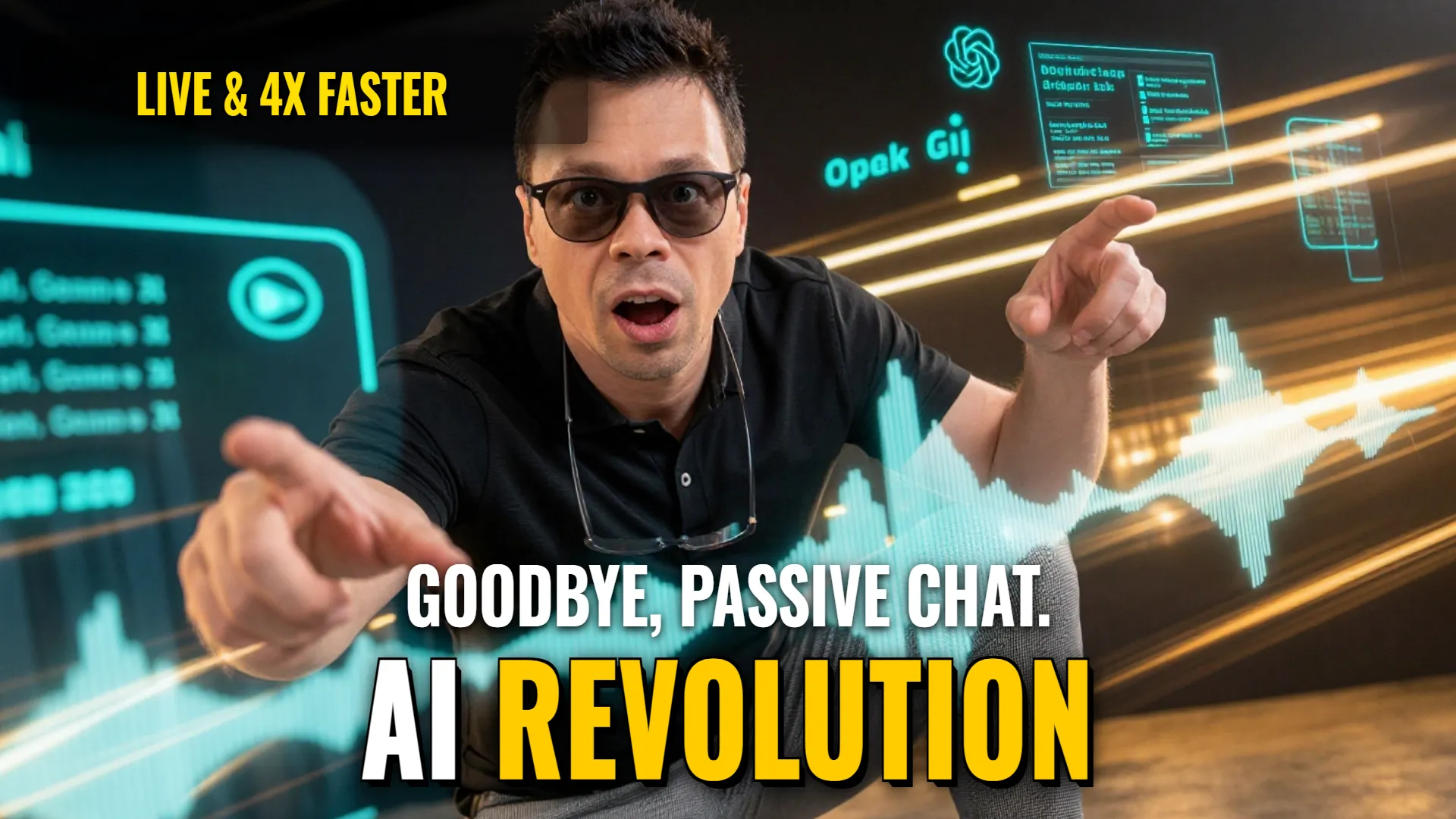
Evolution or Revolution? The New Wave of Interactive and Efficient AI
The current landscape is shifting from passive 'request-response' interactions to active, live conversation/reasoning while simultaneously prioritizing computational efficiency. We are seeing a move away from heavy resource consumption (Opus) towards smarter token management (Grok) and more natural human-machine interfaces (GPT-Live).
Key Technical Developments
- OpenAI’s Shiftto Real-Time Interaction ($b$ {GPT-Live}):
- Transitioned from a walkie-talkie style ('speak then listen') to full duplex conversational capabilities where users can interrupt any time without losing context으로(interruptible).
- New noise filtering allows for use in loud environments like cafes by separating voice from background noise.
- Three speed tiers introduced: Instant (fast), Medium (balanced accuracy), and High (integrating GPT-5.5 Thinking for complex reasoning tasks).
- Full access available on Go, Plus, and Pro plans; mini version provided evenings free accounts. API support pending release.
- SpaceXAI Efficiency & Integration ({b}$f${b} Grok 4.5):
- Focused heavily on coding ability using NVIDIA GB300 hardware.
- Efficiency advantage: Consumes 4x fewer tokens than Opus 4.8 for similar results, making it faster and cheaper via API ($2/1M input / $6/1M output tokens).
- Direct workflow integration with Microsoft Office (Excel formulas and PowerPoint diagrams) or Cursor IDE.
Note regarding accessibility:$ While certain tools move toward better consumer UX through live chat, some high-performance models such as Grok face temporary regional restrictions (e.g., EU restricted until mid-July).
Bottom Line: The industry is pivoting towards 'live' interaction speeds and heavy optimization of token costs to make advanced AI more practical for daily workflows rather than just a slow thinking tool.
! DYOR (Do Your Own Research)