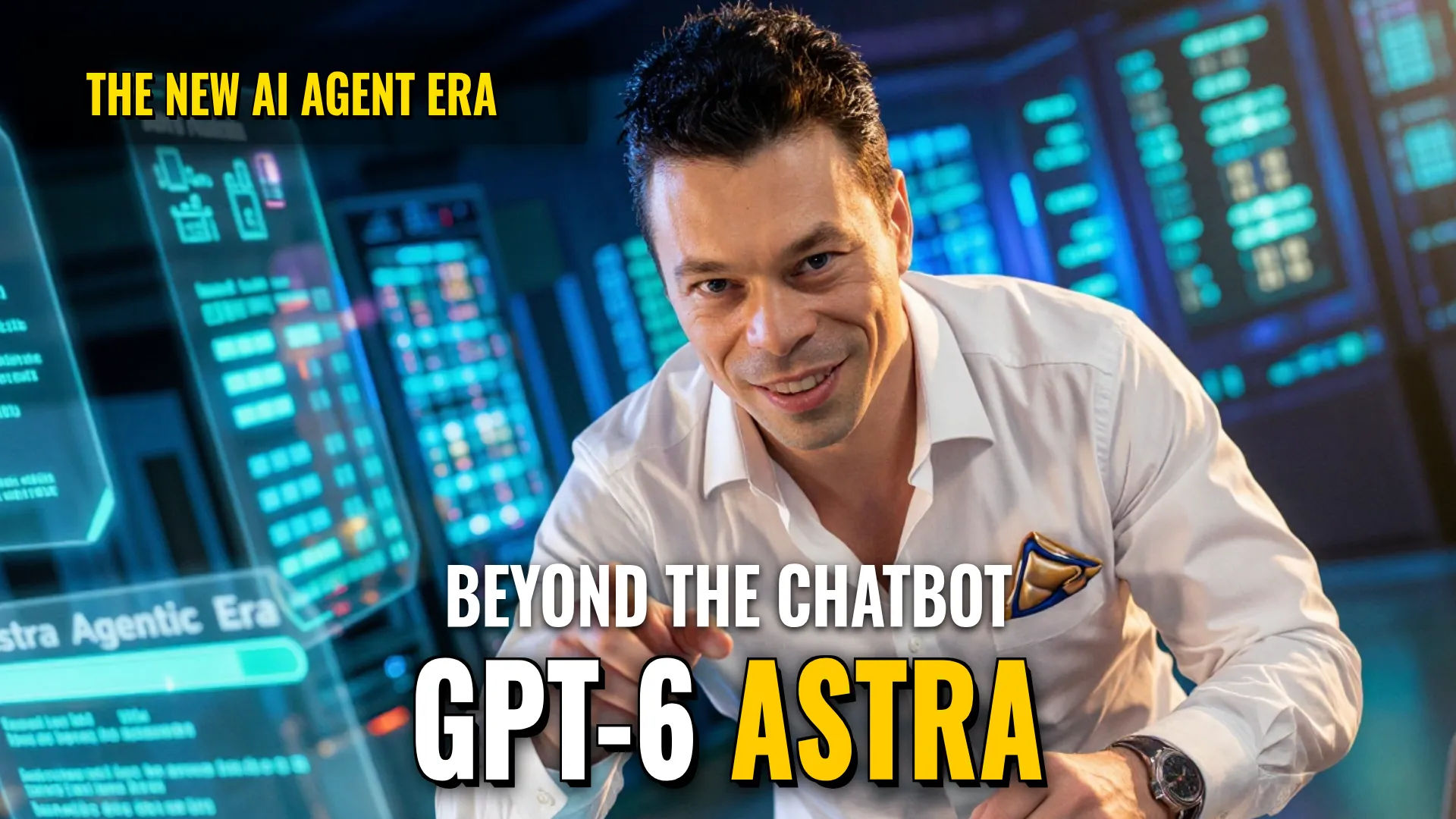
The Emergence of GPT-6 Astra: Transitioning to an Era of AI Agency
We are witnessing a fundamental transition from 'asking AI questions' to 'assigning tasks to AI.' The release of GPT-6 Astra signals that OpenAI is moving beyond simple chat interfaces towards fully capable AI agents able to operate computers, write complex code, and perform multi-step research independently.
Key Technical Advancements & Performance Benchmarks
- Autonomous Capability (Agency): Unlike previous models acting as passive responders, Astra functions as an agent capable of interacting with computer interfaces, managing files, using browsers, and executing long-term tasks without human intervention.
- Superior Reasoning and Coding: Data shows a massive leap in capability; specifically on the ARC-AGI-3 benchmark where there is a significant gap compared even to Opus 5. Additionally, it demonstrates superior performance in Terminal-Bench 4.0 for coding Tasks.
- Expanded Context or Memory Management: Support for up to 1.05 million input tokens and memory between context windows allows for more stable testing/compaction processes without losing project requirements.
Operational Risks and Economic Barriers
- Security Thresholds: To ensure safety during this increased autonomy, Astra has reached the Critical level under any Preparedness Framework monitoring required before widespread deployment.
- High API Costs: The specialized capabilities come at a premium price ($10 per 1M input tokens / $50 output), making cost optimization via third-party providers necessary for large-scale use cases.
The bottom line (or rather, topline): GPT-6 Astra establishes itself as an agentic leader that significantly outperforms existing models like Claude's Opus series through way better reasoning, computer automation ability, and long-task execution.
! DYOR (Do Your Own Research)