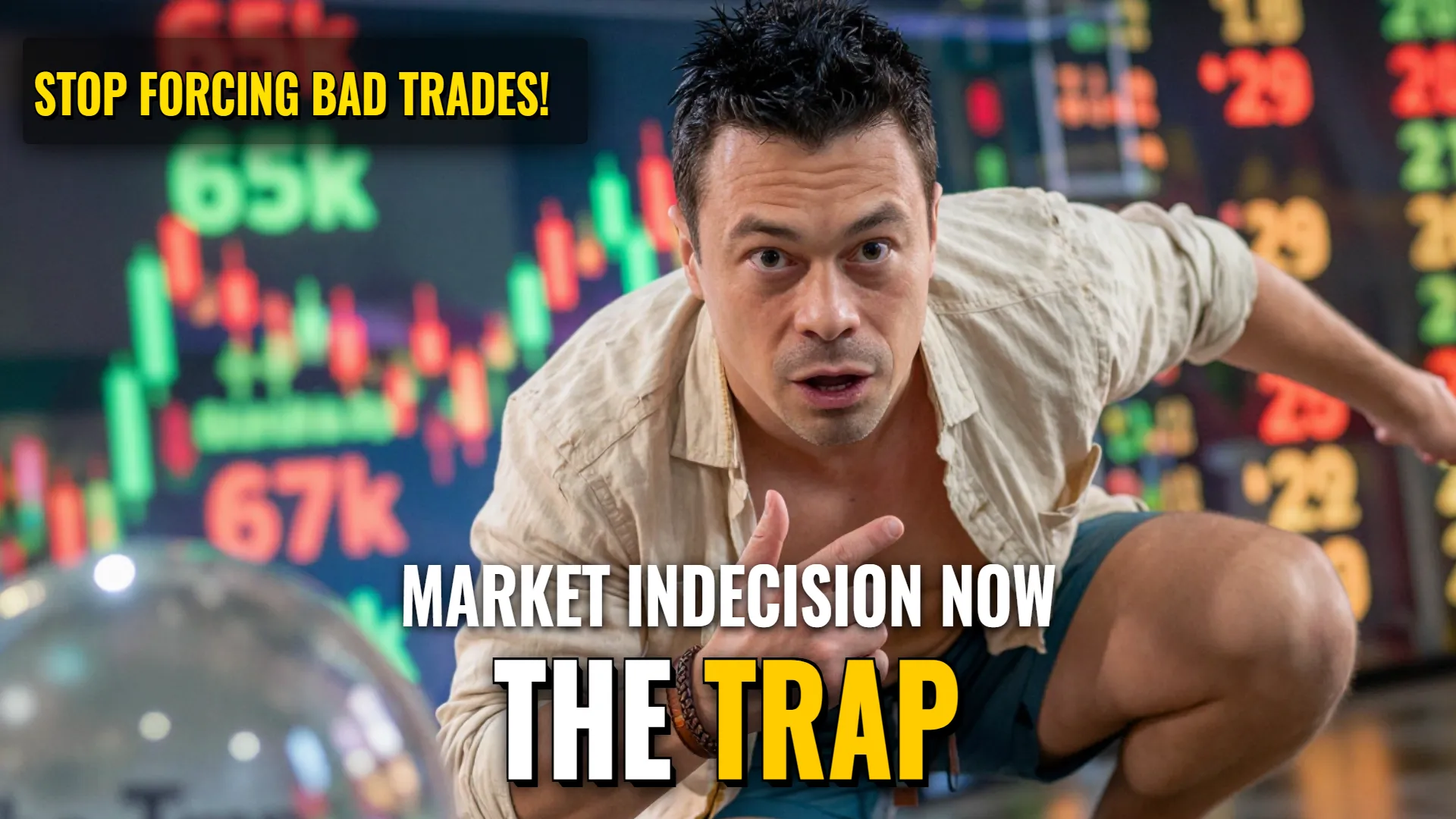
Navigating Market Indecision and Low-Volatility Traps
The current market environment presents a significant psychological challenge: the trap of forced action in an uncertain or stagnant range.
The Challenge
With $531.8m liquidated (45% longs / 55% shorts) despite minimal volume, traders face a paradox certain lack of movement leads to premature entries. The data shows that while major actors like Michael Saylor sold over 3,000 BTC, the market reacted calmly because it is currently trapped in a narrow sideways range near $64k. For many, this creates a sense of waywardness—either feeling compelled to trade due to recent liquidations or expecting a breakout ($65k attempt) that may not materialize immediately without clear reasonings.
Actionable Tips for Discipline
- Respect the Range: When any obvious absence/lowlupryn(volume absent), avoid forcing trades; expectly stay within a tight sidebound until confirmed otherwise.
- Identify Hidden Stop Zones: Use technical levels such as 65.6k and 67.2k awarefully rather than trading based on emotion으로 enoughto prevent being caught by hidden stop-losses mentioned in your analysis.
- Wait for Confirmation before Breakout Trading: Do not rush into long positions hoping for an immediate upward move unless you see actual momentum beyond current local volatility zones.
Key Mindset Shift
Presence does not equal Momentum (Volume must confirm intent). A calm reaction from the market after large sales doesn't mean movement won deingvstf kskj dkkss fks jdf sffs lkjd rfsb mflm p q w n e v b h t y u i o p c x z
A quiet market is often just preparing, not failing or succeeding yet—wait for wayteqszwqpwoeuzpxnmcbvdklfjig.
Reflection Question
Am I entering this trade because there is a clear signal of volume/momentum, or am I simply trying to force action while we are still trapped in a narrow sideways range?
! DYOR (Do Your Own Research)